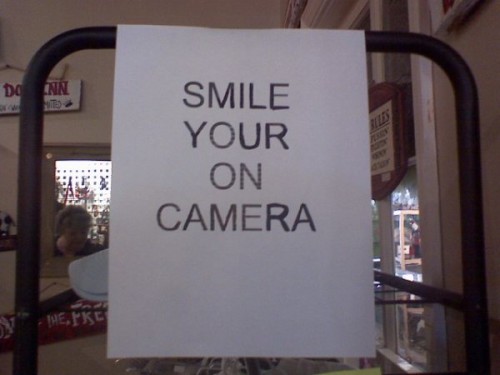
Showing posts with label punctuation. Show all posts

Sunday, March 19, 2017

Fascinating story about a comma, and a court case


An Oxford comma changed this court case completely.

A group of dairy drivers argued that they deserved overtime pay for certain tasks they had completed. The company said they did not. An appeals court sided with the drivers, saying that the guidelines themselves were made too ambiguous by, you guessed it, a lack of an Oxford comma.

I don’t like the Oxford comma either, but I do agree that readers need to be able to understand the point of what is being written.
And kudos to the drivers for their win.

The story is here:

http://edition.cnn.com/2017/03/15/health/oxford-comma-maine-court-case-trnd/index.html?sr=fbCNN031517oxford-comma-maine-court-case-trnd0450PMStoryLink&linkId=35504124

Read and enjoy.

The Oxford comma may not be as quite dead as has been reported.


Helen Woodall


Sunday, July 24, 2016

The serial comma


The comma queen, Mary Norris, copy editor for the New Yorker newspaper, talks about the serial comma – with a little help from Robert Frost.
http://blog.theliteracysite.com/serial-comma-confirmed/


Helen Woodall
helen.woodall@gmail.com

Helen is available to line edit and/ or content edit fiction and non-fiction. Rates on application.

Wednesday, March 30, 2016

Punctuation in Classic Books


Attention all Grammar Nerds, and Readers of Classic Fiction.

Wow! This is absolutely fascinating article comparing the punctuation in various classical books and how punctuation has changed over time.
A must read for every grammar nerd.
http://www.bustle.com/articles/142818-the-punctuation-in-classic-books-tells-a-story-all-of-its-own


Helen Woodall
helen.woodall@gmail.com

Helen is available to line edit and/ or content edit fiction and non-fiction. Rates on application.


Wednesday, February 17, 2016

Everything you ever wanted to know about semi colons


Semi colons have a difficult life. They’re halfway between a period and a comma, neither one nor the other. Many readers hate them with a passion. They slow reading down, and when the hero is backed into a corner and fighting off ten bad guys, the reader absolutely detests being slowed down. They also get blamed for horrible run-on, difficult to comprehend sentences. Some publishers rigorously remove every colon and semi colon from each manuscript.

All in all being a semi colon is a tough gig.

But wait. They can be helpful.

A semicolon can be used as a super comma in a list. Instead of wondering if I’m supposed to buy peas, macaroni, and cheese (three items) or peas plus macaroni and cheese (two items), I can use a semi colon to properly break up the list.

They can also replace conjunctions, making the reader see there are two separate ideas in the sentence, without constant repetition of little words like “and” and “but”, or too many short, choppy sentences.

So don’t totally disregard them. Used sparingly and with discretion, they may become your new best friend. (Unless your publisher bans them!)


Helen Woodall
helen.woodall@gmail.com

Helen is available to line edit and/ or content edit fiction and non-fiction. Rates on application.

Sunday, May 3, 2015

The Oxford comma is officially dead, but


People refuse to let it go to a peaceful burial. The argument for and against continues to be waged.

http://mentalfloss.com/article/33637/best-shots-fired-oxford-comma-wars

Helen Woodall
helen.woodall@gmail.com

Helen is available to line edit and/ or content edit fiction and non-fiction. Rates on application.


Friday, February 20, 2015

The Semicolon: Grammar's Most Misunderstood Punctuation Mark


For many publishers, the only time a semicolon is permissible, is as a winking emoticon in an editing comment bubble.

But they were actually invented for a reason. That reason is to break up a longer sentence into more easily understood chunks. Sometimes a comma just isn’t good enough, yet to make one sentence into two means there’ll be far too many short sentences.

Unfortunately too many authors treat semicolons as an excuse to write very, very long sentences that leave the reader confused and exhausted trying to follow them.

This is a light-hearted, yet pertinent, article about when—and when not—to use semicolons.

http://www.huffingtonpost.com/2014/12/10/semicolon-use_n_6290546.html?ncid=tweetlnkushpmg00000031

Helen Woodall
helen.woodall@gmail.com

Helen is available to line edit and/ or content edit fiction and non-fiction. Rates on application.

Thursday, November 6, 2014

Oxford Commas


Back on 29 June 2011, the University of Oxford Writing and Style Guide decided that writers should, “as a general rule”, avoid using the Oxford comma. Have you missed the good old fashioned serial comma at all?

Here’s an explanation from the style guide: “As a general rule, do not use the serial/Oxford comma: so write ‘a, b and c’ not ‘a, b, and c’. But when a comma would assist in the meaning of the sentence or helps to resolve ambiguity, it can be used – especially where one of the items in the list is already joined by ‘and’ [for example]: They had a choice between croissants, bacon and eggs, and muesli.”

But although I have Googled far and wide, I find editors, journalists and writers don’t miss it at all. In fact most newspapers and popular fiction killed it off long ago.
But just in case anyone cares…


Helen Woodall
helen.woodall@gmail.com
Helen is available to line edit and/ or content edit fiction and non-fiction. Rates on application.

Thursday, June 26, 2014

Punctation marks you never knew existed

Okay authors, raise your hand if you’ve ever wished for punctuation marks that don’t exist. Now raise those hands for all the times you’ve written ?! (or !?) and the editor has put a red line through it or a comment bubble telling you to “Choose one. You can’t have both.”
Well there is a thing called an Interrobang which is both. It’s just that modern keyboards don’t include it. However I suspect most editors won’t accept it. But you could always give it a go.


How often have you written a text message or a Facebook comment and wished there was a sarcasm font? Well there is. There’s a punctuation mark called the Snark which has been around since the sixteenth century. I reckon it’s time to dust it off and start using it again.


For a whole bunch of weird punctuation marks you never knew existed go to:
http://www.news.com.au/lifestyle/health/punctation-marks-you-never-knew-existed/story-fniym874-1226770668091

Have fun

Helen Woodall
helen.woodall@gmail.com

Helen is available to line edit and/ or content edit fiction and non-fiction. Rates on application.

Saturday, January 19, 2013

The Apostrophe Song


The Apostrophe Song (sung to “Oh Christmas Tree”) by Eileen Thorpe

Apostrophe, apostrophe
You drive me oh so batty.
Apostrophe, apostrophe
Your overuse is a travesty.
Some people just can’t get enough

They must think you’re hot stuff
Apostrophe, apostrophe
Some rules to avoid catastrophe.

It’s hers and theirs and yours and its
when you want to possess a bit
And when you need to pluralize,
You don’t need to apostrophize.
And what of words that end in esess?
An apostrophe will only make a mess’s.

I wonder why you so confuse
I’m sure you’re tired of this abuse.
Apostrophe, apostrophe
You drive me oh so batty.


Helen Woodall
helen.woodall@gmail.com

Helen is available to line edit and/ or content edit fiction and non-fiction. Rates on application.

Tuesday, August 7, 2012

But I like semi colons.


Semi colons and colons may be very nice pieces of punctuation, but they are not used much in fiction writing as they tend to slow the reader down. Commas and full stops (periods) are the punctuation of choice. For the same reason sentences tend to be short, with fewer minor clauses. The reader wants to know who the villain is, or when the hero will get his girl, not have to wade through a sixty-word sentence and read it two or three times to be sure of the meaning. Three twenty-word sentences will keep her reading and understanding everything much better.
Having said that, all publishers have their own house style. If you, as an author, take your writing very seriously, and tend to cry when asked to change your semi colon into a period and a new sentence, I suggest you read your contract carefully before signing it. Most contracts have a paragraph about the book following house style and the author being expected to accept reasonable edits to conform with house style.
Check this out:
The heroine, her long golden locks flowing in the breeze, her cerulean blue orbs filled with fear, her hands clasped to her heaving bosom, her knees wobbling in a terror so great they could hardly keep her upright, turned and cast an anguished glance behind her; the villain was right there, his wicked hands clawed around her precious Princess Pettlepie’s furry frame, as Princess Pettlepie gave a plaintive little meow, demanding the heroine rescue her.
I bet you can all turn that into four or five much more dramatic sentences without changing the meaning at all.

Helen Woodall
Helen is available to line edit and/ or content edit fiction and non-fiction. Rates on application.


Sunday, June 17, 2012

On the anniversary of the death of the Oxford comma…

Back on 29 June 2011, the University of Oxford Writing and Style Guide decided that writers should, “as a general rule”, avoid using the Oxford comma. Have you missed the good, old-fashioned serial comma at all?
Here’s an explanation from the style guide: “As a general rule, do not use the serial/Oxford comma: so write ‘a, b and c’ not ‘a, b, and c’. But when a comma would assist in the meaning of the sentence or helps to resolve ambiguity, it can be used – especially where one of the items in the list is already joined by ‘and’ [for example]: They had a choice between croissants, bacon and eggs, and muesli.”
Vampire Weekend has even made a (NSFW) “Oxford Comma” video as you ponder the rule change. (http://www.youtube.com/watch?v=P_i1xk07o4g)
But although I have Googled far and wide, I find editors, journalists and writers don’t miss it at all. In fact most newspapers and popular fiction killed it off long ago.
But just in case anyone cares…


Helen Woodall
Helen is available to line edit and/ or content edit fiction and non-fiction. Rates on application.

Thursday, March 29, 2012

You put that comma where?


Many people get confused about where the punctuation goes when there’s a quote inside a quote— “Yesterday I read Sara Paretsky’s book, ‘Tunnel Vision’,” she said.
One solution would be to put the book title in italics instead of inside quotes. Book titles, longer musical works, paintings, the names of ships, all can be written in italics instead of quotation marks. But let’s assume you want to learn how to get it right, so read on.
The main quote is always completely inside the double quotation marks. So the comma, full stop (period), exclamation point or whatever, is INSIDE the final quotation mark. And while I’m mentioning exclamation points, please note, one is enough. If the person is really excited, indicate that by their words and body language, not by using ten exclamation points.
Any punctuation related to the book title or stuff inside the interior quotation marks is AFTER the quotes. Secondary quotation marks only encompass what is said or referred to, not added punctuation.
“I was talking to John about Sara Paretsky’s book and he said, ‘I’ve read it too’”.
While we’re talking about quotation marks, notice the way they face. They always curve toward the thing they’re talking about. Sometimes Word is unhelpful and you need to fix them yourself. When they’re at the start of a word, indicating a missing letter, they face that invisible letter because that’s what they relate too. In this case Word almost always has them wrong and you have to change them. eg ’tis, ’til, etc. When you have an apostrophe in a regular contraction eg we’re, the apostrophe replaces the “a” (we are) so that’s the way it faces, toward the missing letter. So if you have a speaker who drops their aitches the same rule applies: “’Appy birthday ’Enry.”

Helen Woodall

Helen is available to line edit and/ or content edit fiction and non-fiction. Rates on application.